
I found out the way most of us find out things now: a headline, scrolled past too quickly, then re-read because it couldn’t possibly say what I thought it said. Nirmal “Nimsdai” Purja, the man who redefined what a human body could do at altitude, has died in an avalanche on Broad Peak in Pakistan, along with nine others on his expedition. He was 43.
I never met him, so I have no idea the grief people are going through right now, but Nims Purja changed the shape of my life in a small, specific, very real way, and I think that’s worth writing down, both for him and for anyone else who felt the same pull he gave so many of us.
I actually found out about him quite late on via a Joe Rogan Experience episode back in 2024. Rogan, who interviews everyone from astronauts to fighters to physicists, sounded genuinely stunned by this man across from him, a Nepali-born former British Army soldier who had decided, almost on a whim crossed with total conviction, that he was going to climb all fourteen of the world’s 8,000-metre peaks faster than anyone in history.
I went down the rabbit hole pretty quickly. I watched “14 Peaks: Nothing Is Impossible” on Netflix that same week, and I don’t think I’ve watched a documentary since that hit me quite like it did. It wasn’t the summits themselves, spectacular as they were; it was the ethos and character on screen.
A man who had grown up in Nepal, joined the British Army, and served for years before turning around and saying the mountaineering establishment’s rules about what was “possible” simply didn’t apply to him. In 2019, he climbed all fourteen of the world’s 8,000-metre peaks in 189 days, six months and six days, smashing a record that had stood for nearly eight years.

I have a long-standing respect for people who serve: soldiers, medics, the men and women who do the unglamorous, dangerous work that the rest of us rarely think about until we need them. That’s part of why Nims’s story landed so hard with me, and it’s also why I found my way, not long after, to Ant Middleton’s Everest documentary. Watching Middleton, another product of British special forces, leading climbers up Everest, I kept seeing the same thread that ran through Nims’s story: an almost stubborn refusal to let the mountain, or the doubt, win. Two different men, two different expeditions, but the same unmistakable military discipline underneath, the idea that suffering is data, not a stop sign, something I really took on board when it comes to my own health, fitness and businesses.
Somewhere in the weeks after watching 14 Peaks, I made a decision that felt small at the time and turned out not to be. I laced up a pair of boots I’d owned for years and barely used, and I drove over to the Lake District. I didn’t have a plan beyond “get out there.” I remember standing at the base of Scafell Pike, “what the fuck am I doing here?”, feeling genuinely intimidated by something that, in the grand scheme of Nims’s world, was barely a hill. But I kept thinking about him standing on the summit of K2 in winter, in conditions that kill experienced mountaineers, and I thought: I can at least get to the top of this one.
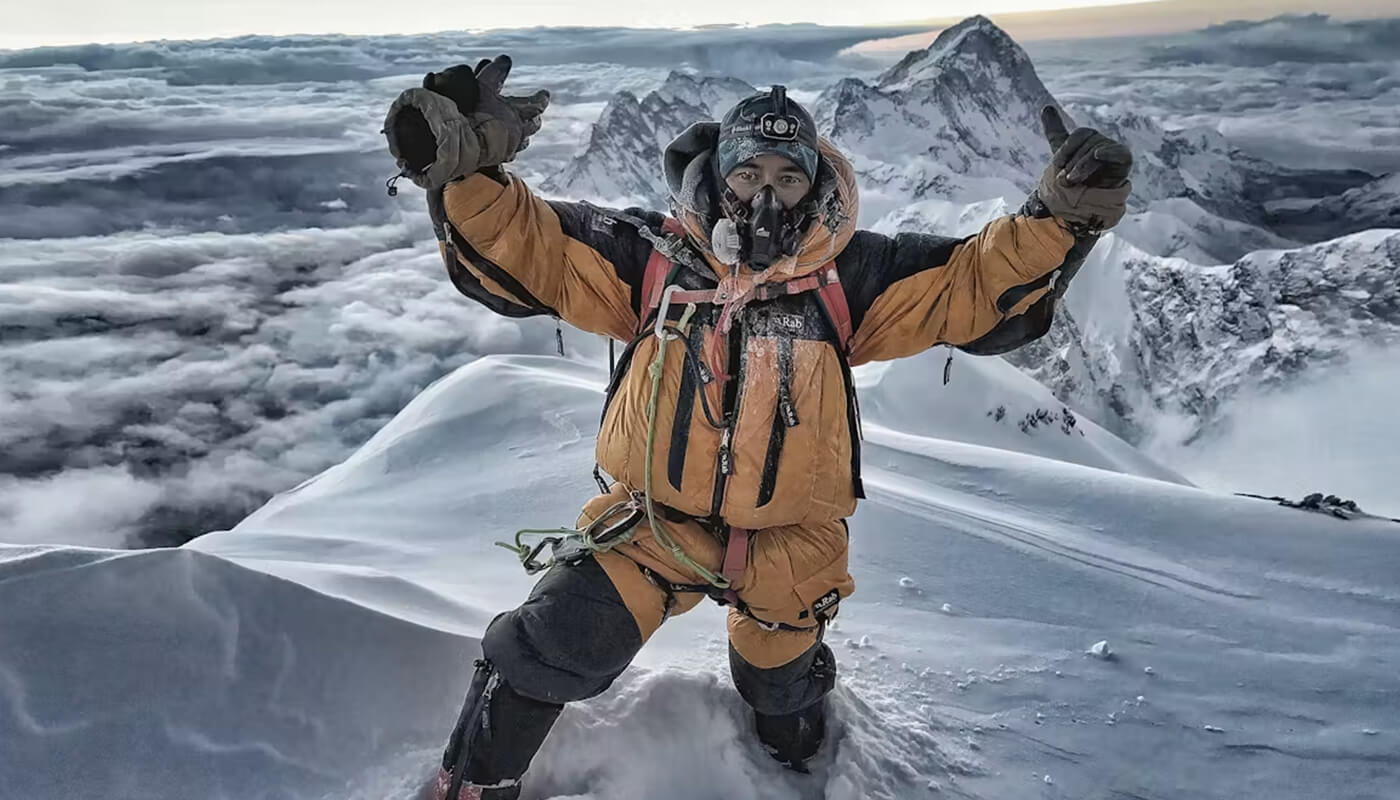
I did. And then I went back the following month, and the month after that. The Lakes has become something like a second home to me: Scafell Pike, Helvellyn, the long ridge walks that leave your legs aching and your head, for once, completely quiet. None of it compares to what Nims did, not remotely, and I’d never pretend otherwise. But he gave me the initial shove. He made “impossible” feel like a word worth questioning rather than a word worth obeying.
That’s the strange gift people like him give the rest of us. Most of us will never summit an 8,000-metre peak. Most of us will never need to. But watching someone refuse to accept the ceiling everyone else has agreed on recalibrates something in you. It did in me. I think about that Netflix documentary title more than I probably should, especially when times get so fucking difficult, but “Nothing Is Impossible” isn’t a hollow motivational phrase, but something Nims actually lived, tested, and proved, repeatedly, at altitudes that would kill most of us within hours.
The details coming out of Pakistan are still being confirmed. But the news is that Nims tragically lost his life following a huge avalanche on Broad Peak, and with him, other members of his team.

There’s a particular cruelty in the fact that Broad Peak, the world’s twelfth-highest mountain, took a man who had made a career of proving that human limits were negotiable. Mountains don’t negotiate. They never have. Nims knew that better than almost anyone alive; he talked often about respecting the mountain even as he pushed against every assumption of what was achievable on it.
The nine others lost with him deserve to be more than a number in this story, even from someone who never knew them. Pur Bahadur Gurung, known to friends as Yukta, had summited Everest more times than anyone from his community in Nepal, ten times – and had climbed twelve of the 8,000-metre giants himself, including a K2 ascent completed in under 24 hours. He spent much of his career on rescue operations, pulling stranded climbers off mountains rather than just conquering them.
Nadhira Al Harthy, from Oman, held a master’s degree in geography and had a full career in her country’s Ministry of Education before becoming the first Omani woman to summit Everest, and later the first Omani to summit K2.
Mallory Geis, 39, from San Antonio, had only just started at this level of climbing, his was her first attempt at an 8,000-metre peak. Earlier this year she’d posted about closing her Pilates studio to take, in her words, “a giant leap of faith into the unknown”.

Nepal’s Prime Minister, Balendra Shah, released a statement calling the deaths “tragic” and saying the news had “shocked” the country. He put something into words that I think anyone drawn to these stories understands instinctively: that the physical journey of each of these climbers has been interrupted, but the history of their courage, dedication, and contribution remains. It’s a generous way to think about loss like this, not as an ending, but as an interruption to something whose value doesn’t depreciate just because it stopped.
I keep thinking about his family, and about the families of the nine others who died alongside him. Whatever we owe public figures who inspire us from a distance, it is nothing compared to what is owed to the people who actually knew and loved them. I hope, if nothing else, that the outpouring of tributes from people like myself, strangers who found something in his story that changed how we lived our small, unremarkable lives, offers some small comfort. He mattered. He mattered to people he never met, in ways he probably never fully understood.
I won’t pretend my grief here is the same as the grief of someone who knew him personally, or served alongside him, or climbed with him. It isn’t. But I’ll say this: the man got me off my sofa and onto the hills and mountains in the Lake District, when I’d more or less accepted that adventure was something other people did. He didn’t do that on purpose. He never knew I existed. He just told the truth about what he’d done, on camera and in interviews, and it turned out that was enough.
Rest easy, Nimsdai. Thank you for the version of “possible” you left behind for the rest of us to borrow.
For website design & development speak to us at StackUp Digital


